Pushkara Navamsa — The Most Auspicious Nakshatra Positions
Pushkara Navamsa — The Most Auspicious Nakshatra Positions
Not every degree of the zodiac carries equal weight. While Gandanta zones mark points of concentrated challenge, Pushkara Navamsa marks the opposite — zones of inherent nourishment, support, and auspiciousness. A planet sitting in Pushkara Navamsa receives a kind of cosmic backing that protects and elevates its results, even during difficult transits or Dasha periods.
What Pushkara Means
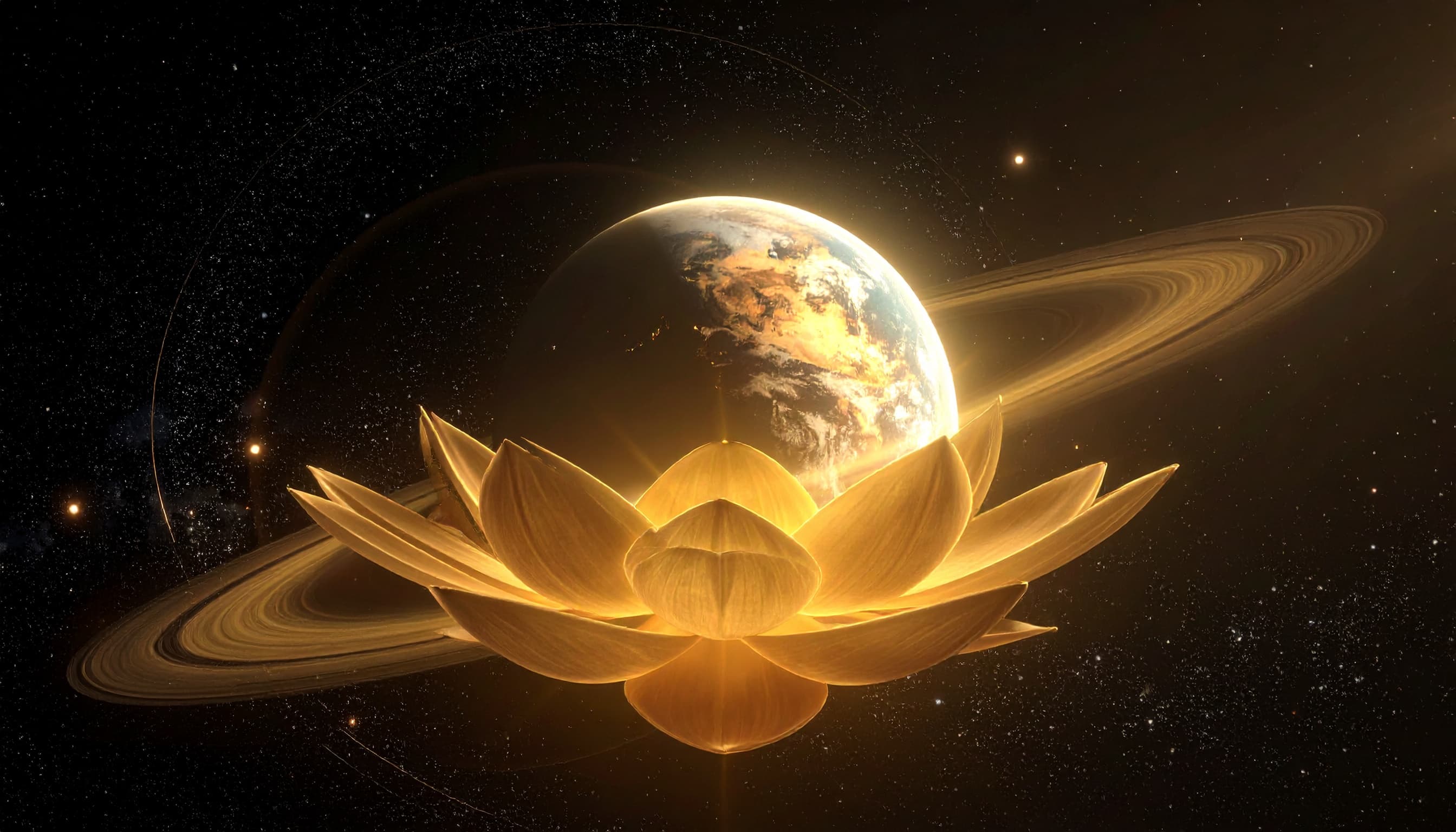
"Pushkara" derives from the Sanskrit word for "nourishing" or "lotus" — something that grows from muddy water into beauty. In astrological context, Pushkara designates specific degree zones within each sign where planets receive enhanced support.
There are two related but distinct concepts:
Pushkara Navamsa: Specific Navamsa divisions (each Navamsa spans 3°20') that are classified as inherently benefic. There are 24 Pushkara Navamsas distributed across the 12 signs, meaning each sign contains exactly 2 Pushkara Navamsa positions. These Navamsas consistently fall in signs ruled by natural benefics — Jupiter (Sagittarius, Pisces), Venus (Taurus, Libra), Mercury (Gemini, Virgo), and Moon (Cancer).
Pushkara Bhaga: Specific individual degrees (one per sign) that carry the highest concentration of Pushkara energy. These are the most auspicious single degrees in the zodiac. A planet at the exact Pushkara Bhaga degree of a sign receives exceptional nourishment.
The Nakshatra framework intersects with Pushkara through the Pada system. Each Nakshatra has four Padas, and each Pada maps to a specific Navamsa sign. When that Navamsa sign happens to be a Pushkara Navamsa for the sign in question, the Nakshatra Pada itself becomes Pushkara.
Where Pushkara Navamsas Fall
Each sign contains two Pushkara Navamsas. The pattern follows the distribution of benefic-ruled Navamsa divisions:
Fire signs (Aries, Leo, Sagittarius): Pushkara Navamsas fall in the Navamsa divisions corresponding to Venus-ruled and Jupiter-ruled signs. For Aries, the Pushkara Navamsas are the 7th division (Libra Navamsa, 20°00'–23°20') and the 9th division (Sagittarius Navamsa, 26°40'–30°00').
Earth signs (Taurus, Virgo, Capricorn): Pushkara Navamsas correspond to Moon-ruled and Mercury-ruled Navamsa divisions. For Taurus, the Pushkara positions are the 3rd division (Cancer Navamsa, 6°40'–10°00') and the 5th division (Virgo Navamsa, 13°20'–16°40').
Air signs (Gemini, Libra, Aquarius): Pushkara Navamsas fall in Venus-ruled and Jupiter-ruled Navamsa divisions. For Gemini, the Pushkara positions are the 6th division (Scorpio is excluded — the actual Pushkara falls in benefic Navamsa divisions per sign).
Water signs (Cancer, Scorpio, Pisces): Pushkara Navamsas correspond to Mercury-ruled and Moon-ruled divisions.
The exact Pushkara mapping requires detailed Navamsa tables, but the underlying principle is consistent: Pushkara Navamsas always correspond to Navamsa signs governed by natural benefics.
How Pushkara Affects Planets
A planet in Pushkara Navamsa receives several benefits:
Enhanced dignity: Even a planet with average strength gains a boost. It's not as dramatic as exaltation, but it provides a consistent baseline of positive energy that supports the planet's significations.
Protection during difficulty: During challenging transits (Saturn aspects, Rahu-Ketu transits) or difficult Dasha periods, a Pushkara planet retains a core of positive expression. It bends but doesn't break.
Improved results in its house: The house a Pushkara planet rules tends to produce better results than its overall chart status might suggest. A 7th lord in Pushkara Navamsa, for instance, gives marriage prospects a supportive undertone even if other factors are mixed.
Dasha period quality: The Mahadasha or Antardasha of a Pushkara planet tends to deliver its positive significations more reliably. Difficult events during that Dasha come with built-in support — problems resolve, help appears, outcomes trend positive.
Pushkara vs. Gandanta vs. Vargottama
These three concepts form a spectrum of special Navamsa positions:
Gandanta — the challenging extreme. Planets at the water-fire sign junctions face concentrated karmic intensity. Early-life difficulty, eventual transformation. The "knot" that unties through experience.
Pushkara — the supportive position. Planets in nourishing Navamsa divisions receive backing and protection. Consistently positive baseline. The "lotus" that grows even in muddy conditions.
Vargottama — the consistent position. Planets in the same sign in both D1 (Rashi) and D9 (Navamsa) charts gain reliability and clarity of expression. What you see is what you get — the planet's promise is consistent across levels of the chart.
A planet can be both Vargottama and Pushkara — this is an exceptional combination indicating a planet that is both consistent in its expression and nourished in its support. A planet can also be Gandanta in the Rashi chart while occupying Pushkara Navamsa — this indicates intense karmic energy with a strong support system, producing people who face real challenges but have the resources to transform them.
Pushkara in Muhurat (Electional Astrology)
Beyond natal chart analysis, Pushkara positions are extensively used in Muhurat — the branch of astrology that selects auspicious times for important activities.
Pushkara Lagna: When the Ascendant at the time of an event falls in a Pushkara Navamsa, the event receives built-in nourishment. Astrologers selecting wedding dates, business launch times, or property purchase moments often prioritize Pushkara Lagna as a key criterion.
Pushkara Moon: Starting an important activity when the Moon transits a Pushkara Navamsa adds emotional and psychological support to the venture. This is especially relevant for activities involving the public, women, or nurturing (since the Moon governs these areas).
Monarch Destiny's analysis includes Pushkara identification because these positions explain a pattern clients often notice — certain areas of life feeling "supported" or "lucky" without an obvious explanation. The explanation is frequently a Pushkara planet governing that life area.
Pushkara Bhaga: The Peak Degrees
Each sign has one specific degree classified as Pushkara Bhaga — the single most nourishing degree in that sign:
| Sign | Pushkara Bhaga |
|---|---|
| Aries | 21° |
| Taurus | 14° |
| Gemini | 18° |
| Cancer | 8° |
| Leo | 5° |
| Virgo | 12° |
| Libra | 7° |
| Scorpio | 11° |
| Sagittarius | 23° |
| Capricorn | 14° |
| Aquarius | 19° |
| Pisces | 9° |
A planet at or very near the exact Pushkara Bhaga of its sign receives the most concentrated nourishing energy. This is a rare and distinctly positive placement.
Practical Implications
Knowing whether your key planets occupy Pushkara positions helps explain several chart patterns:
- Why certain areas of life feel easier than your overall chart would suggest
- Why some difficult periods resolve better than expected
- Why specific Dasha periods deliver more positive results than the planet's basic strength indicates
- Why certain ventures started at particular times succeed despite apparent obstacles
The Pushkara framework adds nuance to chart interpretation by identifying hidden sources of support that basic planet-in-sign analysis might miss.
FAQ
See frontmatter above for structured FAQ data.
Discover Your Pushkara Placements
Pushkara positions are subtle but powerful — they explain the quiet advantages in your chart that basic readings often overlook. Understanding which planets receive this nourishment, and when their Dasha periods activate, reveals a layer of potential you may not have recognized.
Start by chatting with our free Vedic astrology AI at monarchdestiny.com/chat to explore the special positions in your chart.
For precise, chart-specific identification of Pushkara Navamsa, Vargottama, and Gandanta placements in your birth chart, generate your Premium Report and unlock Monarch AI at monarchdestiny.com.
Frequently Asked Questions
How do I know if I have a planet in Pushkara Navamsa?
You need your exact planetary positions in degrees and minutes. Each sign has specific Navamsa divisions that qualify as Pushkara — typically the Navamsas falling in signs ruled by benefic planets (Jupiter, Venus, Mercury, Moon) within certain signs. A precise birth chart calculation will show which Navamsa each planet occupies. The Monarch Destiny Premium Report identifies Pushkara placements automatically.
Is Pushkara Navamsa more important than Vargottama?
They measure different things. Vargottama means a planet occupies the same sign in both the birth chart (D1) and the Navamsa chart (D9) — this gives consistency and reliability. Pushkara Navamsa means the planet sits in a specifically nourishing Navamsa division — this gives support and protection. A planet that is both Vargottama and in Pushkara Navamsa is exceptionally well-placed. Neither is universally 'more important' — they're complementary indicators of planetary strength.
Can Pushkara Navamsa help a debilitated planet?
It provides meaningful support but doesn't cancel debilitation entirely. A debilitated planet in Pushkara Navamsa is like someone going through a difficult period with a strong support system — the difficulty is real, but the resources to handle it are present. The planet still struggles with the challenges of debilitation, but Pushkara placement ensures it receives enough nourishment to produce some positive results alongside the difficulties.
Discover Your Cosmic Blueprint
Get a personalized Vedic astrology or numerology report crafted just for you. Decode your destiny with precise celestial insights.
ORDER YOUR REPORTMore from Monarch Destiny
Hasta Nakshatra — Personality, Career, Marriage & Predictions
Hasta Nakshatra natives are skilled, quick-witted and remarkably capable with their hands. Explore personality, career, marriage and Dasha predictions.
Uttara Phalguni Nakshatra — Personality, Career, Marriage & Predictions
Uttara Phalguni natives are dependable, principled and generous friends. Explore personality, career, marriage dynamics and Dasha predictions.
Purva Phalguni Nakshatra — Personality, Career, Marriage & Predictions
Purva Phalguni natives are warm, creative and drawn to pleasure and rest. Explore personality, career, marriage dynamics and Dasha predictions.