Nakshatras Decoded — How Your Birth Star Shapes Your Destiny
If someone asks you what your "sign" is, they are almost always referring to the Western Sun sign — Aries, Taurus, Gemini. It is a broad-brush system that groups roughly 2.3 billion people (one-twelfth of the world) into the same personality profile.
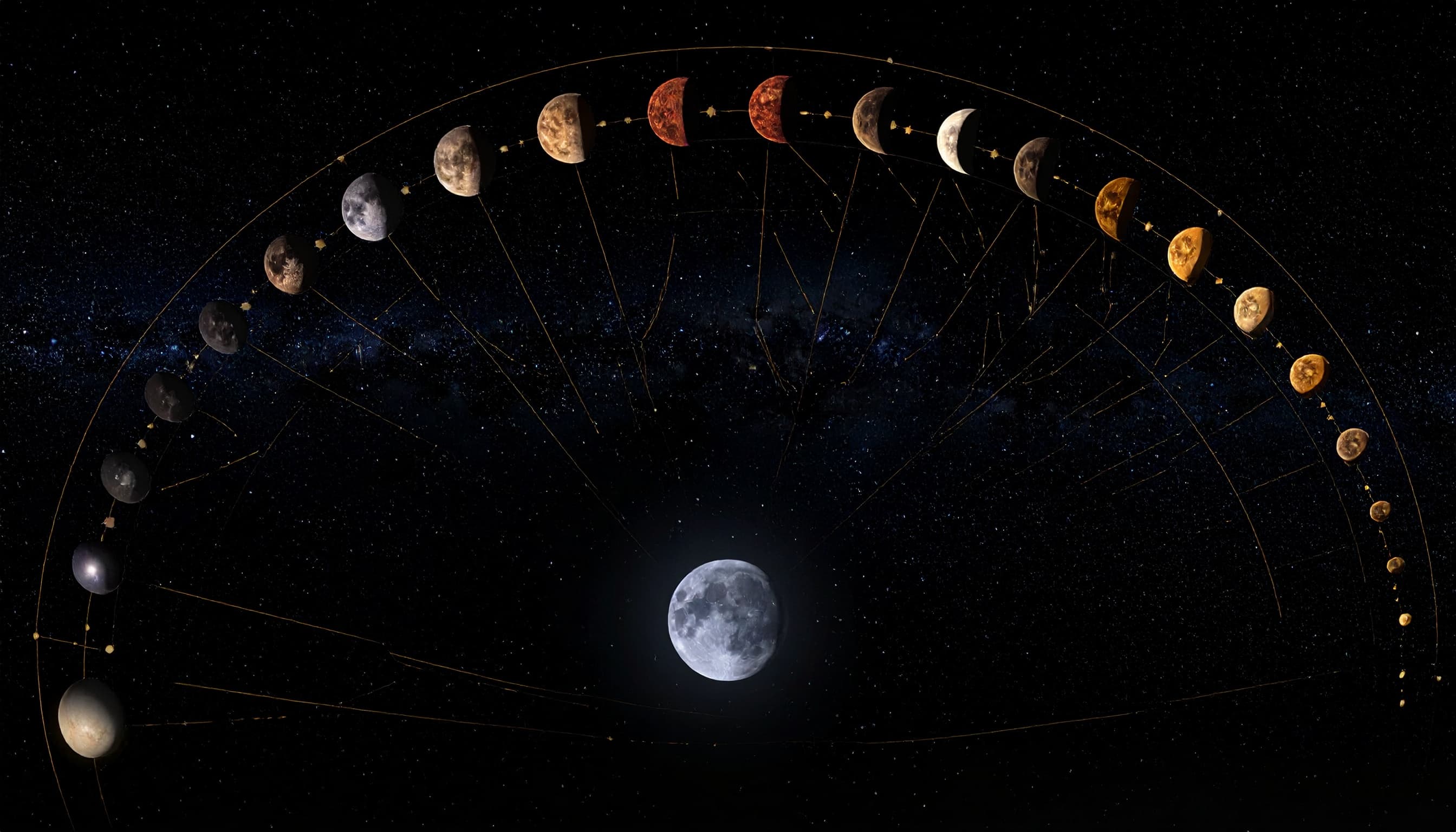
Vedic astrology does something far more precise. Instead of dividing the zodiac into 12 signs, it divides it into 27 Nakshatras — lunar mansions that each span just 13 degrees and 20 minutes of arc. Your Moon's Nakshatra at birth (your birth star or Janma Nakshatra) determines your emotional core personality, the planetary ruler that initiates your Dasha timeline, and your compatibility framework for relationships. It is the single most specific personality marker in Jyotish.
Two people born under the same Moon sign — say, Taurus — might have Moons in Rohini, Mrigashira, or Krittika. Those three Nakshatras produce dramatically different people: a magnetic artist, a restless seeker, and a sharp-tongued purifier. The sign is the neighborhood. The Nakshatra is the specific house.
This guide covers all 27 Nakshatras with their degree ranges, ruling planets, core personalities, career tendencies, and special classifications. It draws from BPHS for structural data, Phaladeepika for Dasha assignments, and Saravali for behavioral descriptions. Everything here uses the Parashari system with Whole Sign houses.
How Nakshatras Work
The 360-degree zodiac is divided into 27 equal segments of 13 degrees 20 minutes each. These are the Nakshatras — ancient lunar mansions that predate the 12-sign zodiac system by centuries. Early Vedic astronomers tracked the Moon's nightly position against these 27 star groups, and the system became the backbone of Indian timekeeping, personality analysis, and electional astrology.
The Three Key Functions of Nakshatras
1. Personality blueprint. The Moon's Nakshatra at birth defines your emotional temperament, instinctive reactions, mental patterns, and psychological archetype. Each Nakshatra has a presiding deity whose mythology encodes the native's core life story. Ashwini natives are healers and first-responders. Bharani natives bear heavy responsibilities. Rohini natives create beauty. The Nakshatra gives the finest grain of personality interpretation that signs and houses alone cannot reach.
2. Dasha ruler assignment. Each Nakshatra is governed by one of the nine Vimshottari Dasha planets. The Moon's Nakshatra at birth determines which planet's Mahadasha is active at the moment of birth — and therefore the entire sequence of planetary periods that unfold across your lifetime. For a deep dive into how this timing system works, see our complete guide to the Mahadasha system. The fixed Dasha durations are: Ketu 7, Venus 20, Sun 6, Moon 10, Mars 7, Rahu 18, Jupiter 16, Saturn 19, Mercury 17 — totaling 120 years.
3. Compatibility matching. Marriage compatibility in Vedic astrology relies heavily on Nakshatra-based factors: Gana (temperament), Yoni (sexual and behavioral compatibility), Nadi (health and genetic compatibility), and several others collectively called Ashtakoota matching.
The Four Padas
Each Nakshatra is subdivided into four Padas (quarters) of 3 degrees 20 minutes each. Every Pada corresponds to a Navamsa sign — so a single Nakshatra cycles through four different Navamsa signs, creating four distinct flavors of the same Nakshatra. Two people with Moon in Ashwini can have noticeably different emotional expressions depending on whether they fall in Pada 1 (Aries Navamsa — fiery and impulsive) or Pada 4 (Cancer Navamsa — nurturing and empathetic).
The 27 Nakshatras multiplied by 4 Padas produce 108 segments — the same sacred number found throughout Indian philosophy and the reason a japa mala has 108 beads.
Three Temperament Groups (Gana)
Every Nakshatra falls into one of three Gana types, critical for compatibility:
- Deva (Divine): Ashwini, Mrigashira, Punarvasu, Pushya, Hasta, Swati, Anuradha, Shravana, Revati — gentle, righteous, and refined
- Manushya (Human): Bharani, Rohini, Ardra, Purva Phalguni, Uttara Phalguni, Purva Ashadha, Uttara Ashadha, Purva Bhadrapada, Uttara Bhadrapada — balanced, worldly, and practical
- Rakshasa (Fierce): Krittika, Ashlesha, Magha, Chitra, Vishakha, Jyeshtha, Moola, Dhanishta, Shatabhisha — independent, dominating, and self-driven
All 27 Nakshatras
1. Ashwini — 0 deg 00 min to 13 deg 20 min Aries
Ruler: Ketu | Deity: Ashwini Kumaras (divine twin physicians) | Gana: Deva | Symbol: Horse's head
Ashwini is the first Nakshatra — the cosmic dawn. It carries the energy of speed, healing, and new beginnings. Ashwini natives are fast-acting, spontaneous, and instinctive. They possess a natural gift for medicine, emergency response, and revitalization. The mind is quick but can be impatient — these are people who act before they deliberate. Youthful vitality persists well into later years. The twin horse physicians of the gods bestow the ability to restore what is broken, making Ashwini a Nakshatra of healers and first-movers.
Career tendency: Medicine, surgery, emergency services, sports, physiotherapy, Ayurveda, automobile industry, adventure tourism.
2. Bharani — 13 deg 20 min to 26 deg 40 min Aries
Ruler: Venus | Deity: Yama (god of death and dharma) | Gana: Manushya | Symbol: Yoni (female reproductive organ)
Bharani carries the paradox of Venus ruling in Aries under the guardianship of Yama, the lord of death. It is the Nakshatra of bearing — bearing responsibility, bearing children, bearing karmic weight. Bharani natives handle extremes that would overwhelm others: birth, death, moral complexity, intense creative and sexual energy. They are deeply passionate, morally opinionated, and endowed with extraordinary endurance. The tension between Venus's desire for pleasure and Yama's demand for discipline defines this Nakshatra.
Career tendency: Gynecology, judiciary, criminal law, entertainment, hospitality, agriculture, insurance, tax and revenue.
3. Krittika — 26 deg 40 min Aries to 10 deg 00 min Taurus
Ruler: Sun | Deity: Agni (god of fire) | Gana: Rakshasa | Symbol: Razor, flame
Krittika straddles Aries and Taurus, bringing the fire god's energy across two different elemental territories. The Aries portion is martial and cutting — sharp tongues, penetrating intellect, fierce moral convictions. The Taurus portion is nurturing fire — cooking, goldsmithing, warmth that sustains. Krittika natives purify through fire: they cut through dishonesty, burn away pretense, and cannot tolerate deception. Their criticism is precise and sometimes merciless. When channeled well, this Nakshatra produces brilliant surgeons, military leaders, and editors.
Career tendency: Military, fire services, culinary arts, metallurgy, surgery, criticism and editing, spiritual leadership, laser technology.
4. Rohini — 10 deg 00 min to 23 deg 20 min Taurus
Ruler: Moon | Deity: Brahma (the creator) | Gana: Manushya | Symbol: Ox cart, banyan tree
Rohini is the Moon's most beloved Nakshatra — in classical mythology, the Moon was cursed for favoring Rohini over his other 26 Nakshatra wives. It is the most fertile, beautiful, and materially creative of all Nakshatras. Rohini natives are magnetic, artistic, sensual, and deeply rooted in material reality. They create beauty and attract abundance effortlessly. Eyes and facial features tend to be striking. The danger is possessiveness and attachment to comfort — Rohini can become so attached to what it creates that it struggles to let go.
Career tendency: Fashion, beauty, agriculture, banking, real estate, jewelry, perfumery, vocal music, acting, luxury goods, dairy.
5. Mrigashira — 23 deg 20 min Taurus to 6 deg 40 min Gemini
Ruler: Mars | Deity: Soma (Moon god) | Gana: Deva | Symbol: Deer's head
Mrigashira is the eternal seeker — the deer that searches the forest endlessly for something it can sense but never quite find. This Nakshatra produces gentle, curious, perceptive people with beautiful eyes and a restless quality. The Taurus portion seeks through material experience and sensory beauty; the Gemini portion seeks through intellectual exploration and communication. Mrigashira natives are natural researchers and explorers, but fulfillment remains elusive because the journey matters more than any destination.
Career tendency: Research, travel industry, fashion design, gemology, singing, wildlife and forestry, advertising, writing, cartography.
6. Ardra — 6 deg 40 min to 20 deg 00 min Gemini
Ruler: Rahu | Deity: Rudra (fierce form of Shiva) | Gana: Manushya | Symbol: Teardrop, diamond
Ardra is the thunderstorm — destruction followed by renewal. Rudra presides as the storm god, and Rahu adds confusion and intensity. Ardra natives experience life through struggle, suffering, and eventual transformation. They are intellectually sharp, emotionally turbulent, and driven to understand why things break. The teardrop symbol tells the story: sorrow that cleanses. Many Ardra natives go through significant early-life upheaval that becomes the foundation of their greatest achievements. Technology, research, and psychology are natural domains.
Career tendency: Software and technology, electrical engineering, pharmacy, psychology and psychiatry, investigation, fiction writing, social reform.
7. Punarvasu — 20 deg 00 min Gemini to 3 deg 20 min Cancer
Ruler: Jupiter | Deity: Aditi (mother of the gods) | Gana: Deva | Symbol: Bow and quiver, house
Punarvasu means "return of the light" — after Ardra's storm comes renewal. Aditi, the boundless cosmic mother, blesses this Nakshatra with infinite second chances. Punarvasu natives bounce back from failure, rebuild after destruction, and find their way home after long journeys. Optimism and philosophical resilience define this Nakshatra. The bow and arrow symbolize the ability to aim again after missing. The Gemini portion recovers through intellectual reframing; the Cancer portion (especially Pada 4) recovers through emotional reconnection and homecoming.
Career tendency: Teaching, publishing, travel and tourism, import-export, philosophy, spiritual counseling, real estate, archery and sports.
8. Pushya — 3 deg 20 min to 16 deg 40 min Cancer
Ruler: Saturn | Deity: Brihaspati (Jupiter, guru of the gods) | Gana: Deva | Symbol: Cow's udder, lotus
Pushya is widely considered the most auspicious Nakshatra in the entire zodiac. Saturn's discipline meets Jupiter's wisdom in Cancer's nurturing waters — a combination that produces the finest teachers, advisors, and community builders. The cow's udder symbolizes selfless nourishment: giving abundantly without expecting return. Pushya natives are patient, generous, traditional, and deeply committed to family and dharma. This Nakshatra often produces people who hold families and communities together. The only risk is excessive conservatism — clinging to tradition when adaptation is needed.
Career tendency: Teaching, counseling, spiritual leadership, dairy and food industry, government welfare, banking, childcare, nursing, agriculture.
9. Ashlesha — 16 deg 40 min to 30 deg 00 min Cancer
Ruler: Mercury | Deity: Sarpas/Nagas (serpent deities) | Gana: Rakshasa | Symbol: Coiled serpent
Ashlesha is the serpent Nakshatra — cunning, hypnotic, psychologically penetrating, and potentially dangerous. Mercury's intellect in Cancer's emotional waters creates a mind that thinks through feelings and uses emotional intelligence with strategic precision. Ashlesha natives read people instantly. At the highest expression, this produces profound healers and psychologists who understand the deepest layers of the human psyche. At its shadow, it produces manipulation and emotional venom. The coiled snake also represents kundalini energy — tremendous spiritual potential that requires careful handling. Gandanta zone: The final degrees of Ashlesha (approaching 30 deg Cancer) form a Gandanta junction with Magha — a deeply karmic transition point.
Career tendency: Psychology, hypnotherapy, pharmacy, occult sciences, espionage, astrology, alternative medicine, chemical engineering, political strategy.
10. Magha — 0 deg 00 min to 13 deg 20 min Leo
Ruler: Ketu | Deity: Pitris (ancestors, forefathers) | Gana: Rakshasa | Symbol: Throne room, royal court
Magha sits at the beginning of Leo — the sign of kings — and connects the native to ancestral lineage and inherited authority. The Pitris (departed ancestors) preside, giving Magha a quality of past-life dignity, regal bearing, and expectation of respect. Magha natives carry themselves with authority even in humble circumstances. Ketu's rulership adds spiritual depth — true Magha power comes from ancestral merit, not personal ego. The shadow is arrogance and living in past glory rather than creating present value. Gandanta zone: The opening degrees of Magha (approaching 0 deg Leo from Cancer) form a Gandanta junction with Ashlesha.
Career tendency: Government administration, politics, management, history, archaeology, heritage management, performing arts, family business, astrology.
11. Purva Phalguni — 13 deg 20 min to 26 deg 40 min Leo
Ruler: Venus | Deity: Bhaga (god of marital bliss and fortune) | Gana: Manushya | Symbol: Front legs of a bed, hammock
Purva Phalguni is the Nakshatra of pleasure, romance, and creative enjoyment. Venus in Leo's territory produces people who are naturally magnetic, artistically gifted, and drawn to luxury and celebration. The front legs of the bed represent the beginning of rest, relaxation, and intimate connection. Bhaga bestows marital happiness and inherited fortune. Purva Phalguni natives are generous, socially popular, and creative — especially in performance arts. The risk is indulgence: too much relaxation, too much pleasure-seeking, and insufficient discipline.
Career tendency: Entertainment, acting, cinema, music, fashion, luxury goods, wedding planning, photography, hospitality, government arts and culture.
12. Uttara Phalguni — 26 deg 40 min Leo to 10 deg 00 min Virgo
Ruler: Sun | Deity: Aryaman (god of patronage and contracts) | Gana: Manushya | Symbol: Back legs of a bed
Where Purva Phalguni seeks pleasure, Uttara Phalguni carries the responsibility that follows. The back legs of the bed represent the completion and stability of what was started. Aryaman governs contracts, patronage, and social obligations — making this a Nakshatra of commitment and follow-through. The Leo portion radiates leadership and generosity; the Virgo portion adds service, analysis, and practical execution. Uttara Phalguni natives are reliable, leadership-oriented, and emotionally stable. Marriage is a serious partnership, not a romantic adventure.
Career tendency: Management, HR, social work, government service, contract law, NGOs, healthcare administration, counseling, partnership-based business.
13. Hasta — 10 deg 00 min to 23 deg 20 min Virgo
Ruler: Moon | Deity: Savitar (creative aspect of the Sun) | Gana: Deva | Symbol: Open hand, palm
Hasta is the Nakshatra of the hand — manual skill, craftsmanship, dexterity, and the ability to manifest through touch. Savitar bestows the power to place things in one's hands — to literally grasp and create. Hasta natives are quick-witted, detail-oriented, and extraordinarily skilled with their hands. They express emotion through action and craft rather than words. Moon's rulership adds emotional sensitivity and intuition to the practical Virgo territory. These are natural healers, artisans, and problem-solvers. The lighter side is humor and sleight-of-hand; the shadow is cunning and manipulation.
Career tendency: Surgery, craftsmanship, pottery, massage therapy, palmistry, accounting, manufacturing, tailoring, magic and performance, jewelry setting.
14. Chitra — 23 deg 20 min Virgo to 6 deg 40 min Libra
Ruler: Mars | Deity: Tvashtar/Vishwakarma (divine architect) | Gana: Rakshasa | Symbol: Bright jewel, pearl
Chitra means "the brilliant one" — and brilliance in both aesthetic and engineering senses defines this Nakshatra. Tvashtar, the celestial architect, presides over creation of beautiful structures and flawless designs. Mars provides the energy and drive; the Virgo portion channels it into precise, analytical craftsmanship while the Libra portion channels it into balanced, aesthetically perfect creation. Chitra natives are strikingly attractive, visually gifted, and drawn to architecture, design, and structural beauty. They see form and proportion where others see emptiness.
Career tendency: Architecture, interior design, fashion, jewelry design, graphic design, engineering, sculpture, cinema direction, photography, cosmetic surgery.
15. Swati — 6 deg 40 min to 20 deg 00 min Libra
Ruler: Rahu | Deity: Vayu (god of wind) | Gana: Deva | Symbol: Young plant shoot in the wind, coral
Swati is the most independent Nakshatra in the zodiac. Vayu (the wind god) and Rahu together create a personality that bends without breaking — adaptable, diplomatic, and fiercely self-reliant. The young plant shoot blown by the wind symbolizes flexibility combined with deep roots. Swati natives are natural diplomats and traders, comfortable moving between different worlds and cultures. International trade, travel, and cross-cultural communication are strong themes. The mind values freedom above all else. The risk is restlessness and an inability to commit to one path.
Career tendency: International trade, diplomacy, law, aviation, business, stock trading, yoga and breathing arts, politics, mediation, import-export.
16. Vishakha — 20 deg 00 min Libra to 3 deg 20 min Scorpio
Ruler: Jupiter | Deity: Indra and Agni (king of gods and fire god, jointly) | Gana: Rakshasa | Symbol: Decorated gateway, triumphal arch
Vishakha is the Nakshatra of single-minded focus and relentless ambition. The triumphal arch represents the goal that must be reached at any cost. Indra (power) and Agni (fire) jointly preside — a combination that produces charismatic, persuasive, and sometimes obsessive achievers. Vishakha natives channel all emotional energy toward their objectives. The Libra portion pursues through strategy and alliance; the Scorpio portion pursues through sheer intensity and willpower. Jealousy and competitive emotions run strong. The mind does not rest until the goal is achieved — and then immediately sets a new one.
Career tendency: Corporate leadership, politics, religious and spiritual leadership, research, public speaking, motivational coaching, brewing and alcohol, military.
17. Anuradha — 3 deg 20 min to 16 deg 40 min Scorpio
Ruler: Saturn | Deity: Mitra (god of friendship and divine contracts) | Gana: Deva | Symbol: Lotus flower, staff
Anuradha is the Nakshatra of devoted friendship and disciplined emotional depth. Saturn's structure in Scorpio's intense waters, guided by Mitra (the god of friendship), produces people who value genuine connection above all other bonds. Anuradha natives endure great hardship for the people they love. The lotus symbolizes beauty growing from muddy water — these are people who bloom in difficult conditions. Life abroad or long-distance relationships are common themes. Despite Scorpio's reputation for intensity, Anuradha tempers it with loyalty, discipline, and warm devotion.
Career tendency: International organizations, diplomacy, music, mining, archaeology, statistics, insurance, foreign residence, management, counseling.
18. Jyeshtha — 16 deg 40 min to 30 deg 00 min Scorpio
Ruler: Mercury | Deity: Indra (king of gods) | Gana: Rakshasa | Symbol: Circular amulet, umbrella
Jyeshtha means "the eldest" — and this Nakshatra carries the weight and authority of the eldest sibling, the chief, the protector. Indra presides as the king who earned his throne through competence and courage. Mercury's sharp intellect in Scorpio's psychological depths creates strategists and leaders who understand power dynamics at the deepest level. Jyeshtha natives are natural protectors with a fierce sense of responsibility. They earn respect through competence rather than inheritance. The shadow is jealousy, rivalry, and the isolation that comes with authority. Gandanta zone: The final degrees of Jyeshtha (approaching 30 deg Scorpio) form a Gandanta junction with Moola — the deepest karmic knot in the zodiac.
Career tendency: Senior leadership, military and police command, detective work, government authority, intelligence services, psychological professions, elder care.
19. Moola — 0 deg 00 min to 13 deg 20 min Sagittarius
Ruler: Ketu | Deity: Nirriti (goddess of destruction and dissolution) | Gana: Rakshasa | Symbol: Tied bunch of roots
Moola means "the root" and this Nakshatra's purpose is to dig to the root of everything — tearing down surface layers, destroying illusions, and exposing the foundation underneath. Nirriti presides as the goddess who dissolves what is false. Ketu adds detachment and spiritual intensity. Moola natives are natural investigators, philosophers, and deconstructors. Life typically involves a significant destructive phase — loss of what seemed stable — that clears the ground for something more authentic. Pain is the teacher, and the spiritual potential is enormous once the destruction phase passes. Gandanta zone: The opening degrees of Moola (approaching 0 deg Sagittarius from Scorpio) form a Gandanta junction with Jyeshtha.
Career tendency: Research, pharmacy, herbal medicine, root-cause analysis, surgery, philosophy, spiritual teaching, demolition, mining, forensics, archaeology.
20. Purva Ashadha — 13 deg 20 min to 26 deg 40 min Sagittarius
Ruler: Venus | Deity: Apas (cosmic water deity) | Gana: Manushya | Symbol: Elephant tusk, fan
Purva Ashadha means "the former invincible one" — and invincibility through conviction defines this Nakshatra. Venus in Jupiter's sign under the guardianship of Apas (purifying water) produces people who are charismatic, philosophically certain, and persuasive. Purva Ashadha natives inspire through sheer confidence and moral conviction. They can declare victory before the battle is fully won — premature confidence is the primary risk. The elephant tusk symbolizes the ability to uproot obstacles, while the fan symbolizes the winnowing of truth from falsehood. Emotional purification through philosophical practice is a central theme.
Career tendency: Philosophy, motivational speaking, water-related industries, debate, law, publishing, international relations, maritime and shipping.
21. Uttara Ashadha — 26 deg 40 min Sagittarius to 10 deg 00 min Capricorn
Ruler: Sun | Deity: Vishvadevas (ten universal gods) | Gana: Manushya | Symbol: Elephant tusk (single), small cot
Where Purva Ashadha declares premature victory, Uttara Ashadha earns unchallengeable, permanent victory through sustained effort and universal principles. The Vishvadevas (universal gods representing ten divine virtues) preside — making this a Nakshatra of principled leadership and lasting achievement. Sun's rulership adds authority and focus. The Sagittarius portion provides vision and philosophy; the Capricorn portion provides the structural discipline to manifest it. Uttara Ashadha natives often achieve late but permanent success. They lead through earned respect, not charisma alone.
Career tendency: Government leadership, military strategy, judiciary, pioneer in any field, international organizations, long-term planning, construction, social leadership.
22. Shravana — 10 deg 00 min to 23 deg 20 min Capricorn
Ruler: Moon | Deity: Vishnu (the preserver) | Gana: Deva | Symbol: Three footprints, ear
Shravana means "hearing" and represents the power of listening — absorbing knowledge, connecting ideas, and preserving wisdom through oral tradition. Vishnu presides as the all-pervading preserver who listens to all prayers. Moon's emotional intelligence in Saturn's practical Capricorn creates people who learn through careful listening rather than study alone. They pick up subtle cues others miss. Shravana natives are natural counselors, communicators, and knowledge keepers. The three footprints represent the ability to walk steadily toward a goal while listening to the world around them. At Monarch Destiny, we consistently see that Shravana natives excel in roles where deep listening is the primary skill.
Career tendency: Media, radio, music, teaching, counseling, telecommunications, journalism, public relations, knowledge management, sound engineering.
23. Dhanishta — 23 deg 20 min Capricorn to 6 deg 40 min Aquarius
Ruler: Mars | Deity: Eight Vasus (elemental gods of nature) | Gana: Rakshasa | Symbol: Drum (mridanga)
Dhanishta means "the wealthiest" and "the star of symphony." Mars in Saturn's signs (Capricorn-Aquarius) under the Eight Vasus creates a Nakshatra of rhythmic energy, material ambition, and musical talent. The drum symbolizes rhythm as the foundation of creation — Dhanishta natives understand timing, beat, and the pulse of material life. They are ambitious wealth-builders with a strong sense of rhythm in everything they do. Musical talent, especially percussion and dance, is prominent. The challenge is that Mars's heat in Saturn's cold signs creates inner tension — outward confidence often masks inner loneliness.
Career tendency: Music (especially rhythm and percussion), dance, real estate, sports, martial arts, financial management, corporate finance, property, mining.
24. Shatabhisha — 6 deg 40 min to 20 deg 00 min Aquarius
Ruler: Rahu | Deity: Varuna (god of cosmic waters and celestial law) | Gana: Rakshasa | Symbol: Empty circle, thousand flowers
Shatabhisha means "the hundred physicians" and represents the power to heal through isolation, unconventional methods, and deep understanding of hidden causes. Varuna governs cosmic law and the deep waters of the unconscious. Rahu adds an unconventional, sometimes eccentric quality. Shatabhisha natives are fiercely independent, emotionally self-contained, and drawn to solitude. They prefer to heal — themselves and others — through isolation rather than social engagement. The empty circle represents both wholeness and the void, the contained universe. These are the hermit-healers who need space and privacy to function at their best.
Career tendency: Medicine (especially alternative), pharmacy, electrical engineering, space science, astrology, psychology, technology, water treatment, addiction counseling.
25. Purva Bhadrapada — 20 deg 00 min Aquarius to 3 deg 20 min Pisces
Ruler: Jupiter | Deity: Aja Ekapad (one-footed serpent of Rudra) | Gana: Manushya | Symbol: Front legs of a funeral cot, two-faced man
Purva Bhadrapada is the Nakshatra of radical transformation — the fire that burns before wisdom emerges. Jupiter in Saturn's Aquarius and Jupiter's Pisces under Aja Ekapad (a fearsome Rudra form) produces people who swing between worldly ambition and spiritual fire. The funeral cot symbolizes fascination with endings, death, and what lies beyond. The two-faced man represents the duality between the worldly self and the spiritual self. Purva Bhadrapada natives are powerful speakers, radical thinkers, and zealous advocates for causes they believe in. Life involves extreme phases that fuel eventual spiritual growth.
Career tendency: Spiritual leadership, political activism, philosophy, occult sciences, social revolution, energy work, metallurgy, transformation consulting.
26. Uttara Bhadrapada — 3 deg 20 min to 16 deg 40 min Pisces
Ruler: Saturn | Deity: Ahir Budhnya (serpent of the cosmic deep) | Gana: Manushya | Symbol: Back legs of a funeral cot, snake in water
Where Purva Bhadrapada burns with intensity, Uttara Bhadrapada has mastered the fire and transmuted it into deep, disciplined wisdom. Saturn in Jupiter's Pisces under Ahir Budhnya (the kundalini serpent of the cosmic depths) produces one of the most spiritually evolved Nakshatra placements. Uttara Bhadrapada natives are patient, compassionate, profoundly philosophical, and emotionally controlled. They channel depth into service rather than drama. This Nakshatra produces natural sages, counselors, and spiritual teachers. Late but permanent success is the pattern — these are people who build wisdom slowly and share it generously.
Career tendency: Spiritual teaching, yoga, charity and NGO work, philosophy, marine work, counseling, end-of-life care, astrology, long-term research, retirement planning.
27. Revati — 16 deg 40 min to 30 deg 00 min Pisces
Ruler: Mercury | Deity: Pushan (nourishing sun god, guide of souls) | Gana: Deva | Symbol: Fish, drum
Revati is the final Nakshatra — the soul that has traveled through all 26 previous experiences and arrived at the end of the zodiac with compassion, gentleness, and universal love. Pushan guides travelers, protects cattle, and escorts souls on their final journey. Mercury's communication skill in Jupiter's Pisces creates a mind that is creative, imaginative, and drawn to transcendent beauty. Revati natives are protectors of the vulnerable — animals, children, and the disadvantaged. Their emotional nature absorbs the world's joy and sorrow like a sponge. Love is unconditional at its best. The risk is escapism and insufficient boundaries. Gandanta zone: The final degrees of Revati (approaching 30 deg Pisces) form a Gandanta junction with Ashwini — the end of the zodiac meeting the beginning, the death-rebirth junction.
Career tendency: Travel industry, veterinary science, spiritual counseling, music, art, charity, foster care, sea travel, clock and time-related industries, pilgrimage guidance.
Summary Table: All 27 Nakshatras at a Glance
| # | Name | Ruler | Degree Range | Sign(s) | Key Trait |
|---|---|---|---|---|---|
| 1 | Ashwini | Ketu | 0 deg 00 min - 13 deg 20 min Aries | Aries | Swift healer, pioneer |
| 2 | Bharani | Venus | 13 deg 20 min - 26 deg 40 min Aries | Aries | Endurance, bearing karmic weight |
| 3 | Krittika | Sun | 26 deg 40 min Aries - 10 deg 00 min Taurus | Aries-Taurus | Purifying fire, sharp truth |
| 4 | Rohini | Moon | 10 deg 00 min - 23 deg 20 min Taurus | Taurus | Magnetic beauty, material creation |
| 5 | Mrigashira | Mars | 23 deg 20 min Taurus - 6 deg 40 min Gemini | Taurus-Gemini | Eternal seeker, restless curiosity |
| 6 | Ardra | Rahu | 6 deg 40 min - 20 deg 00 min Gemini | Gemini | Storm and renewal, transformative suffering |
| 7 | Punarvasu | Jupiter | 20 deg 00 min Gemini - 3 deg 20 min Cancer | Gemini-Cancer | Resilient return, second chances |
| 8 | Pushya | Saturn | 3 deg 20 min - 16 deg 40 min Cancer | Cancer | Selfless nourishment, most auspicious |
| 9 | Ashlesha | Mercury | 16 deg 40 min - 30 deg 00 min Cancer | Cancer | Serpent psychology, deep insight |
| 10 | Magha | Ketu | 0 deg 00 min - 13 deg 20 min Leo | Leo | Ancestral authority, royal dignity |
| 11 | Purva Phalguni | Venus | 13 deg 20 min - 26 deg 40 min Leo | Leo | Creative pleasure, romance |
| 12 | Uttara Phalguni | Sun | 26 deg 40 min Leo - 10 deg 00 min Virgo | Leo-Virgo | Committed leadership, patronage |
| 13 | Hasta | Moon | 10 deg 00 min - 23 deg 20 min Virgo | Virgo | Skilled hands, craftsmanship |
| 14 | Chitra | Mars | 23 deg 20 min Virgo - 6 deg 40 min Libra | Virgo-Libra | Brilliant design, architecture |
| 15 | Swati | Rahu | 6 deg 40 min - 20 deg 00 min Libra | Libra | Fierce independence, diplomacy |
| 16 | Vishakha | Jupiter | 20 deg 00 min Libra - 3 deg 20 min Scorpio | Libra-Scorpio | Relentless ambition, single focus |
| 17 | Anuradha | Saturn | 3 deg 20 min - 16 deg 40 min Scorpio | Scorpio | Devoted friendship, endurance |
| 18 | Jyeshtha | Mercury | 16 deg 40 min - 30 deg 00 min Scorpio | Scorpio | Elder authority, strategic protection |
| 19 | Moola | Ketu | 0 deg 00 min - 13 deg 20 min Sagittarius | Sagittarius | Root investigation, destructive renewal |
| 20 | Purva Ashadha | Venus | 13 deg 20 min - 26 deg 40 min Sagittarius | Sagittarius | Invincible conviction, purification |
| 21 | Uttara Ashadha | Sun | 26 deg 40 min Sag - 10 deg 00 min Capricorn | Sagittarius-Capricorn | Permanent victory, principled leadership |
| 22 | Shravana | Moon | 10 deg 00 min - 23 deg 20 min Capricorn | Capricorn | Deep listening, knowledge preservation |
| 23 | Dhanishta | Mars | 23 deg 20 min Cap - 6 deg 40 min Aquarius | Capricorn-Aquarius | Rhythmic wealth, musical talent |
| 24 | Shatabhisha | Rahu | 6 deg 40 min - 20 deg 00 min Aquarius | Aquarius | Hermit healer, unconventional medicine |
| 25 | Purva Bhadrapada | Jupiter | 20 deg 00 min Aquarius - 3 deg 20 min Pisces | Aquarius-Pisces | Radical transformation, spiritual fire |
| 26 | Uttara Bhadrapada | Saturn | 3 deg 20 min - 16 deg 40 min Pisces | Pisces | Deep wisdom, cosmic patience |
| 27 | Revati | Mercury | 16 deg 40 min - 30 deg 00 min Pisces | Pisces | Compassionate guide, universal love |
Nakshatra Compatibility Basics
Marriage matching in Vedic astrology is not based on Sun signs or vague personality quizzes. It is a structured system built on Nakshatra analysis — specifically, a framework called Ashtakoota matching that evaluates eight distinct compatibility factors between the bride's and groom's Moon Nakshatras. The total score is out of 36 points, and traditionally a minimum of 18 is expected for a workable marriage.
The eight factors (Kutas) include:
Varna (1 point): Spiritual compatibility and ego-level match. Based on caste classification of each Nakshatra — not social caste, but spiritual temperament.
Vashya (2 points): Mutual attraction and dominance dynamics. Determines which partner has natural influence over the other.
Tara (3 points): Birth star compatibility. Calculated by counting the Nakshatras between the two Moon positions and checking whether the resulting pattern is auspicious.
Yoni (4 points): Sexual and behavioral compatibility. Each Nakshatra is assigned an animal symbol, and compatibility depends on whether the animals are the same, friendly, neutral, or enemies. For example, Horse and Buffalo are enemy Yonis, while matching animal pairs have the highest compatibility.
Graha Maitri (5 points): Planetary friendship between the two Nakshatra lords. If both Moons are in Nakshatras ruled by friendly planets (say Jupiter and Moon), this scores high. Enemy rulers reduce compatibility.
Gana (6 points): Temperament match. Deva-Deva or Manushya-Manushya pairings score well. Deva-Rakshasa pairings traditionally score zero, though this is often overridden when other factors are strong.
Bhakoot (7 points): The position of the Moon signs relative to each other. Certain combinations (like 6-8 or 2-12 relationships between Moon signs) are considered challenging and reduce this score.
Nadi (8 points): The highest-weighted factor. It assesses health, genetic, and physiological compatibility. Same-Nadi pairings score zero and are traditionally considered a serious dosha (flaw). The three Nadis — Aadi, Madhya, and Antya — are assigned cyclically across the 27 Nakshatras.
A detailed compatibility analysis goes far beyond the score and examines how the couple's Mahadasha periods interact, whether challenging Dashas overlap, and how the house placements in both charts relate to each other.
Gandanta Zones, Pushkara Navamsa, and Vargottama Positions
Beyond the 27 basic Nakshatra descriptions, three special classifications deserve attention because they significantly modify how any Nakshatra expresses itself.
Gandanta: The Karmic Knots
Gandanta (literally "the drowning knot") occurs at the three junctions where a water sign meets a fire sign:
- Ashlesha to Magha: 29-30 deg Cancer to 0-1 deg Leo
- Jyeshtha to Moola: 29-30 deg Scorpio to 0-1 deg Sagittarius (considered the deepest karmic knot)
- Revati to Ashwini: 29-30 deg Pisces to 0-1 deg Aries (the death-rebirth junction)
Planets placed within approximately one degree of these junctions carry intense karmic significance. The soul is transitioning between elemental states — water (emotional, spiritual, dissolving) into fire (action, new beginning, ignition). This transition is not smooth. Gandanta births often involve significant early-life challenges — health scares, family upheaval, or circumstances that force the native to develop unusual resilience. The challenges are not punishments; they are catalysts. Many of the most spiritually evolved and materially accomplished individuals have Gandanta placements that forced them to develop depth early.
Pushkara Navamsa: The Nourishing Degrees
Certain degree ranges within specific signs fall in Pushkara Navamsa — considered the most auspicious subdivisions. A planet in Pushkara Navamsa receives extra nourishment and tends to give better results than its basic dignity would suggest. There are 24 Pushkara Navamsa segments distributed across the zodiac, roughly two per sign. When the Moon or Lagna falls in a Pushkara Navamsa, the native receives a subtle but persistent uplift in that life area. It does not override a debilitated planet, but it softens difficult placements and amplifies strong ones.
Vargottama: The Same Sign in Both Charts
A planet is Vargottama when it occupies the same sign in both the Rashi (birth chart) and the Navamsa (D9 divisional chart). This happens when a planet falls in specific Padas: Pada 1 of movable signs (Aries, Cancer, Libra, Capricorn), Pada 2 of fixed signs, Pada 3 of dual signs, and a few other configurations. Vargottama planets are considered strengthened — their significations become more consistent and reliable. A Vargottama Moon means your emotional core in the birth chart is perfectly aligned with your deeper soul purpose in the Navamsa. A Vargottama Ascendant is one of the strongest chart features possible.
These three special factors — Gandanta, Pushkara, and Vargottama — add precision that generic Nakshatra descriptions miss. You can find your Moon's exact Pada and check for all three factors using the free calculator at monarchdestiny.com.
Frequently Asked Questions
How do I find my birth Nakshatra? Your birth Nakshatra is determined by the Moon's exact position at the time of your birth. Each Nakshatra spans 13 degrees 20 minutes of the zodiac, so precise birth time and location are essential for an accurate result. You can use the free calculator at monarchdestiny.com to find your Moon's Nakshatra instantly.
Is my Nakshatra more important than my Sun sign? In Vedic astrology, your Moon's Nakshatra is far more important than the Western Sun sign. The Nakshatra determines your Vimshottari Dasha sequence, your emotional core personality, and your compatibility in marriage matching. Sun sign astrology is a Western construct that Vedic astrology does not prioritize.
What is a Gandanta Nakshatra and is it bad? Gandanta refers to the junction between water and fire signs — the last degrees of Cancer, Scorpio, and Pisces meeting the first degrees of Leo, Sagittarius, and Aries. Planets at these junctions carry intense karmic significance. It is not "bad" but indicates a soul navigating a deep transition, often expressed as early-life challenges that become catalysts for growth.
Can two people with the same Nakshatra have different personalities? Yes. Each Nakshatra has four Padas (quarters), and each Pada falls in a different Navamsa sign, adding a distinct sublayer. Beyond that, the Nakshatra lord's placement, aspects from other planets, and the house the Moon occupies all modify expression. Two Rohini Moon natives with different Padas and different Ascendants can look quite different.
How does my Nakshatra affect marriage compatibility? Nakshatra compatibility is central to the traditional Ashtakoota matching system. Factors like Gana (temperament match), Yoni (sexual and behavioral compatibility based on animal symbols), and Nadi (health and genetic compatibility) are all derived from the bride's and groom's Nakshatras. These form the core of the traditional 36-point matching score used across India.
Your Nakshatra Is Just the Beginning
Knowing your Nakshatra gives you the most specific personality marker available in Vedic astrology — far more precise than any Sun sign or even Moon sign alone. But the Nakshatra is one layer in a multi-layered system. How your Nakshatra lord is placed, which house your Moon occupies, what Dasha you are currently running, and how all of these interact with your Ascendant chart — that is where generic knowledge becomes personal insight.
Start by chatting with our free Vedic astrology AI at monarchdestiny.com/chat to explore your Nakshatra and what it means for your specific chart.
For precise, chart-specific guidance, generate your Premium Report and unlock Monarch AI at monarchdestiny.com.
Frequently Asked Questions
How do I find my birth Nakshatra?
Your birth Nakshatra is determined by the Moon's exact position at the time of your birth. Each Nakshatra spans 13 degrees 20 minutes of the zodiac, so precise birth time and location are essential for an accurate result. You can use the free calculator at monarchdestiny.com to find your Moon's Nakshatra instantly.
Is my Nakshatra more important than my Sun sign?
In Vedic astrology, your Moon's Nakshatra is far more important than the Western Sun sign. The Nakshatra determines your Vimshottari Dasha sequence, your emotional core personality, and your compatibility in marriage matching. Sun sign astrology is a Western construct that Vedic astrology does not prioritize.
What is a Gandanta Nakshatra and is it bad?
Gandanta refers to the junction between water and fire signs — the last degrees of Cancer, Scorpio, and Pisces meeting the first degrees of Leo, Sagittarius, and Aries. Planets at these junctions carry intense karmic significance. It is not 'bad' but indicates a soul navigating a deep transition, often expressed as early-life challenges that become catalysts for growth.
Can two people with the same Nakshatra have different personalities?
Yes. Each Nakshatra has four Padas (quarters), and each Pada falls in a different Navamsa sign, adding a distinct sublayer. Beyond that, the Nakshatra lord's placement, aspects from other planets, and the house the Moon occupies all modify expression. Two Rohini Moon natives with different Padas and different Ascendants can look quite different.
How does my Nakshatra affect marriage compatibility?
Nakshatra compatibility is central to the traditional Ashtakoota matching system. Factors like Gana (temperament match), Yoni (sexual and behavioral compatibility based on animal symbols), and Nadi (health and genetic compatibility) are all derived from the bride's and groom's Nakshatras. These form the core of the traditional 36-point matching score used across India.
Discover Your Cosmic Blueprint
Get a personalized Vedic astrology or numerology report crafted just for you. Decode your destiny with precise celestial insights.
ORDER YOUR REPORTMore from Monarch Destiny
Your Birth Star Personality — Why Nakshatra Matters More Than Sun Sign
Why your Nakshatra (birth star) gives a far more accurate personality profile than your Sun sign. 108 types vs 12 — the precision difference explained.
How to Find My Nakshatra — Free Calculator and Guide
Learn how to find your Nakshatra (birth star) using a free calculator. Step-by-step guide to discovering your lunar mansion in Vedic astrology.
Nakshatra Remedies — Practical Guidance Without Rituals
Practical Nakshatra remedies based on planetary rulers. Lifestyle guidance for all 27 birth stars — no mantras, no rituals, just actionable steps.